Rev. Demian Dunkley会長のメッセージ:2026-05-31
Rev. Dunkley メッセージ要約
主題:神様の主権を守る ― 最後の戦場は私たちの心
このメッセージの中心は、神様の主権とは何か、そしてその主権を私たち一人一人がどのように守るべきかということです。ダンクリー会長は、神様の主権を「神様が妨げられることなく、ご自身の子女を通して住まい、働き、愛し、ご自身を表現できる自由」と説明します。そして、その主権が外的な制度や建物、組織だけでなく、何よりも人間の心の中で守られるべきものであると語ります。
冒頭では、現在、日本の教会が大きな試練を通過していることに触れます。財産や組織的基盤を失うように見える状況の中でも、ベトナムの修道女たちの例を挙げ、「財産は奪われても、信仰は奪われない」と語ります。そこから、日本の兄弟姉妹への励ましとして、すべてを失ったように見えても、神様と真の父母様への信仰がある限り、すべてを失ったのではないと強調します。
次に、ハイアー・グラウンド・ツアーの意義が語られます。これは単なる行事や講演ツアーではなく、現在の摂理的混乱の中で、会員一人一人がより高い信仰的立場に立つための呼びかけです。ダンクリー会長は、神様の主権を「戦う」だけでなく、守ることが必要だと述べます。
メッセージの中心部分では、善良な人がなぜ神様を裏切ることがあるのかが扱われます。裏切りは敵から来るものではなく、本来なら味方であるべき人、愛する人、信頼していた人から来るものだと説明されます。歴史上、神様を愛し、神様に仕えていた人々でさえ、自分では正しいことをしていると思いながら、結果的に神様の摂理に逆らうことがありました。パリサイ人やユダの例を通して、人間は「真理を守っている」と信じながら、実際には真理を裏切ることがあると語られます。
その根本原因として、ダンクリー会長は恐れを挙げます。人は、地位、評判、安全、影響力、自分の解釈、組織、家族、生活など、「失いたくないもの」がある時、それを守るために神様の主権を少しずつ手放してしまいます。失うことへの恐れが神様との縦的なつながりより強くなる時、人は天に属する地歩を手放してしまうのです。恐れが信仰より強くなり、自己防衛が責任より強くなり、イメージが真理より重要になる時、神様はその人の心の中で地歩を失われます。
しかし、裏切る人だけが問題なのではありません。裏切られた側にも、もう一つの重大な戦いがあります。ダンクリー会長は、最後の最前線は、裏切られた人の心の中にあると語ります。裏切られた時、人は怒り、失望、皮肉、不信、恨みに飲み込まれやすくなります。その時、外で何が壊れるか以上に危険なのは、裏切りが自分の内側で何をするかです。裏切りは、人の心を小さくしようとします。
イエス様は裏切られましたが、裏切りに所有されることはありませんでした。真のお父様も何度も裏切られましたが、裏切りに心を支配される危険を早くから知っておられました。そして今、真のお母様も、ご自身が愛し育ててこられた人々からの裏切りに直面しておられると語られます。しかし、イエス様、真のお父様、真のお母様は、痛みを感じない特別な存在なのではなく、むしろ神様の痛みと人類の損失を深く感じるからこそ、より深く苦しまれる方々です。それでも、その方々は自分の心の中で神様の主権を守る「最後の戦場」の達人であると述べられます。
現在の危機について、ダンクリー会長は、それが三つのレベルで起きていると整理します。第一に個人の心の領域、第二に制度・組織の領域、第三に国家レベルです。しかし、会員が直接コントロールできる最も重要な領域は、外的状況ではなく、自分自身の心の状態です。日本、韓国、アメリカ、世界の摂理的混乱の中で、私たちが本当に守らなければならないのは、自分の心の中で神様が働ける場所です。
ダンクリー会長は、自身の経験として、誰かに深く失望した時、その人が間違っている理由を心の中で何度も並べ立て、自分が正しいと確認したくなると語ります。しかしその過程で、自分の心が小さくなっていくことに気づくと言います。つまり、外的に相手が間違っているとしても、自分の心が皮肉、不信、恨みに支配されるなら、そこでも神様の地歩は失われるのです。
ここで重要なのは、怒ってはいけないということではありません。イエス様も怒られました。しかし、怒りに支配されることなく、責任を取られました。裏切りはイエス様を傷つけましたが、イエス様を所有することはできませんでした。なぜなら、イエス様には、神様の主権を守るためであれば、失うことを拒むものが何もなかったからです。
真のお母様についても同様に語られます。真のお母様には、ご自身の道を楽にするために、神様の主権的領域の一部を妥協する可能性もあったかもしれません。しかしお母様は、神様の摂理、救い、主権の「一センチ」でさえ、ご自身の命よりも貴いものとして守られたと証しされます。これが真のお母様の基準であり、私たちが学ぶべき基準であると語られます。
また、ダンクリー会長は、責任を問うことと恨みは違うと明確にします。間違いを指摘すること、責任を問うことは必要です。しかし、それが恨みや復讐心から来るなら、神様の心情を失います。一方で、真理のない憐れみは「助長」になり、憐れみのない真理は「残酷さ」になります。成熟した信仰者は、真理と憐れみの両方を保たなければなりません。
そのうえで、私たちに問われるのは、地位、承認、使命、組織への所属、人間的理解などが取り去られた時に、何が残るのかということです。自分の周囲で何が起きても、神様に根ざし続ける人間になれるのか。恐れ、エゴ、自己防衛、噂話、恨み、野心、皮肉、不信は、神様の地歩を奪います。反対に、信仰、責任、真理、謙遜、勇気、識別、許し、愛は、神様の地歩を回復します。
最後に、ハイアー・グラウンドとは何かが定義されます。ハイアー・グラウンドとは、制度、地位、権力、認められることではありません。それは、自分の心の中で神様の主権が損なわれずに残っている場所です。私たちは「何を失うことを恐れているのか」を正直に見つめなければなりません。なぜなら、その恐れているものを守るために、私たちは神様の主権を犠牲にしてしまう可能性があるからです。
目的は、すべてを失うことではありません。目的は、決して失ってはならないものが何であるかを知ることです。イエス様、真のお父様、真のお母様の力は、まさにその一点を完全に知り、それを守るためなら自分のすべてを失うこともいとわないところから来ています。それはメシヤ的存在だけの基準ではなく、私たち一人一人にも求められる心情、尊厳、誠実さの基準です。
結論として、神様の主権は、誰かが私たちを裏切った時に失われるのではありません。裏切りが私たちの心を所有した時に失われるのです。神様の最後の戦場は心であり、神様は私たちがその場所で成熟した勝利者となることを願っておられます。日本、韓国、アメリカ、世界で何が起きたとしても、私たちの最も大きな捧げ物は、自分の心の中で神様の主権を守り、広げることです。
真のお母様が「私のことを心配しないでください。自分自身を心配してください」と語られた意味は、そこにあるとダンクリー会長は解釈します。お母様を助けたいなら、外的に心配するだけでなく、自分の心をお母様が立っておられる基準に近づけることが最も大きな助けになります。それによって、私たちは分裂させようとする霊的流れを転換し、これから何十年、何百年、何千年にもわたる美しい天寶の遺産を築くことができます。
最後に、お母様が語られた「あなた方は選ばれた民です」という言葉を受けて、ダンクリー会長は、私たちの選ばれた使命とは、どんな状況にあっても、自分の心の中で神様の主権を守り、広げることだと締めくくります。
Summary of Rev. Dunkley’s Message
Theme: Protecting God’s Sovereignty — The Final Battlefield Is the Human Heart
The central theme of Rev. Dunkley’s message is God’s sovereignty and how each person must protect it within his or her own heart. He defines God’s sovereignty as God’s freedom to dwell, work, love, and express Himself through His children without obstruction. This sovereignty is not only connected to institutions, buildings, nations, or external foundations. Most importantly, it must be protected in the human heart.
At the beginning, Rev. Dunkley refers to the serious trials facing the church, especially in Japan. The church appears to be losing property, external foundations, and even its public standing. He compares this situation to Vietnamese Catholic sisters who lost all their property under a communist government. Although everything external was taken from them, they said, “They could take our property, but they could not take our faith.” In the same way, he encourages the Japanese brothers and sisters that even if everything external seems to be lost, they have not lost everything as long as they still have faith in God and True Parents.
He then introduces the meaning of the Higher Ground Tour. It is not merely a speaking tour or an event. It is a call for members to rise to a higher spiritual position in the midst of confusion, conflict, and providential crisis. Rev. Dunkley explains that it is not enough to fight for God’s sovereignty; we must also protect it.
A major part of the message addresses the question: How can good people betray God? Rev. Dunkley explains that betrayal does not usually come from enemies. Betrayal comes from people who were supposed to be friends, family, leaders, brothers, sisters, or trusted figures. Throughout history, people who loved God and believed they were serving God sometimes ended up working against God’s providence. The Pharisees did not think they were opposing the Son of God. Judas likely did not think he was serving evil. In many cases, people betray truth while believing they are defending it.
Rev. Dunkley identifies fear as one of the main causes of betrayal. When people believe they have something to lose — position, reputation, safety, influence, their own interpretation of truth, institutional standing, family, income, dignity, or security — they may sacrifice a portion of God’s sovereignty in order to protect it. When fear of loss becomes stronger than one’s vertical connection to God, people surrender the ground that belongs to Heaven. Fear becomes stronger than faith, self-protection becomes stronger than responsibility, and image becomes more important than truth. At that point, God loses ground in the person’s heart.
However, the message does not focus only on those who betray. Rev. Dunkley also emphasizes the danger faced by the one who has been betrayed. He says that the final frontier is the heart of the betrayed person. When we are betrayed, disappointed, or wounded, we are tempted to become angry, cynical, distrustful, resentful, and small-hearted. The greatest danger is not only what betrayal destroys around us, but what betrayal does inside us. Betrayal tries to make the heart smaller.
Jesus was betrayed, but He was not owned by betrayal. True Father was betrayed many times, but he understood from early on the danger of allowing betrayal to consume his heart. Today, True Mother is also facing betrayal from people she loved, raised, and trusted. Rev. Dunkley stresses that Jesus, True Father, and True Mother are not special because they feel no pain. Rather, they may feel pain more deeply because they understand how much ground God loses when betrayal occurs. Yet they are masters of the final battlefield: the battlefield within the heart.
Rev. Dunkley explains the current crisis on three levels: the personal level of the heart, the institutional or organizational level, and the national level. All three are important. However, the area that members can most directly control is not the external situation but the condition of their own hearts. Whether in Japan, Korea, America, or anywhere else, the most important offering members can make is to preserve the place in their hearts where God can continue to work.
He shares his own experience of being deeply disappointed by others. When someone he had trusted proves to be wrong, he finds himself listing all the reasons that person is wrong. Yet while doing so, he notices something happening inside himself: his own heart becomes smaller. Even if the other person truly is wrong, if one’s own heart becomes controlled by cynicism, resentment, or distrust, God loses ground there as well.
Rev. Dunkley clarifies that this does not mean anger is always wrong. Jesus Himself became angry. But Jesus took responsibility and was not possessed by anger or betrayal. Betrayal wounded Jesus, but it did not own Him. Jesus had nothing He refused to lose if losing it meant preserving even the smallest foothold of God’s sovereignty.
The same standard is seen in True Mother. Rev. Dunkley explains that there may have been ways for True Mother to make her personal path easier if she had been willing to compromise even a small portion of God’s sovereign realm. But she did not. She showed that even one inch of God’s providence, God’s salvation, and God’s sovereignty was more precious than her own life. This, Rev. Dunkley says, is the standard we must learn from True Mother.
Another important point is the distinction between accountability and resentment. Holding people accountable is necessary. Speaking truth is necessary. But accountability is not the same as bitterness or revenge. Mercy without truth becomes enabling, while truth without mercy becomes cruelty. A mature person of faith must hold both truth and mercy together.
Rev. Dunkley then asks what remains when position, recognition, mission, organizational belonging, approval, and human understanding are taken away. Can we still remain rooted in God? Fear, ego, self-protection, gossip, resentment, ambition, cynicism, and distrust all strip away ground from God. On the other hand, faith, responsibility, truth, humility, courage, discernment, forgiveness, and love restore ground for God to work.
He then defines Higher Ground. Higher Ground is not an institution, title, position, power, or public recognition. Higher Ground is the place in the heart where God’s sovereignty remains intact. Each person must ask, “What am I afraid to lose?” This question matters because the very thing we fear losing may be the thing we are tempted to protect at the cost of God’s sovereignty.
The goal is not to lose everything. The goal is to know what must never be lost. Jesus, True Father, and True Mother had the power they had because they knew with absolute clarity what must never be lost, and they were willing to lose everything else in order to protect it. This is not only the standard of messianic figures; it is the standard of heart, dignity, and integrity that God wants to grow in each of us.
In conclusion, God’s sovereignty is not lost simply because someone betrays us. God’s sovereignty is lost when betrayal owns our heart. The ultimate battlefield of God is the human heart. God wants each of us to become mature and victorious in that battlefield. No matter what happens in Japan, Korea, America, or the world, our greatest collective offering is to protect and expand God’s sovereignty within our own hearts.
Rev. Dunkley interprets True Mother’s words — “Do not worry about me. Worry about yourselves” — as a call for each person to rise internally to the standard where True Mother stands. If we want to help True Mother, the greatest thing we can do is not only worry externally, but bring our own hearts closer to the standard she is maintaining. In doing so, we can help transform the spiritual atmosphere that seeks to divide us and create a beautiful CheonBo legacy for decades, centuries, and even millennia to come.
Finally, Rev. Dunkley returns to True Mother’s words: “You are a chosen people.” Our chosen mission is to protect and expand God’s sovereignty in our hearts, no matter what happens around us.
Spell: enabling
発音: エネイブリング / イネイブリング
日本語で聞くと「ニーザリング」「ニーブリング」のように聞こえることがあります。
意味は文脈によって少し変わりますが、この説教の中では:
enabling = 悪い状態を止めずに、結果的に助長してしまうこと
です。
たとえば、Dunkley会長は次のような対比で使っていました。
Mercy is not enabling.
憐れみは、助長することではありません。
Forgiveness is not enabling.
許しは、悪いことをそのまま許して放置することではありません。
Grace is not enabling.
恩恵は、問題を覆い隠して何もなかったようにすることではありません。
つまりここでの enabling は、
「愛だから、許しだから、憐れみだからと言って、間違いを正さず、その人が同じ問題を続けることを許してしまうこと」
という意味です。
自然な日本語では、
助長
放置して結果的に悪化させること
間違いを正さずに許してしまうこと
甘やかして問題を続けさせること
などが近いです。
字幕なら、文脈によっては 「助長」 が一番短くて使いやすいと思います。
そらく「後半」で使っていた対比の言葉は、特にこの部分です。
英語の対比表現
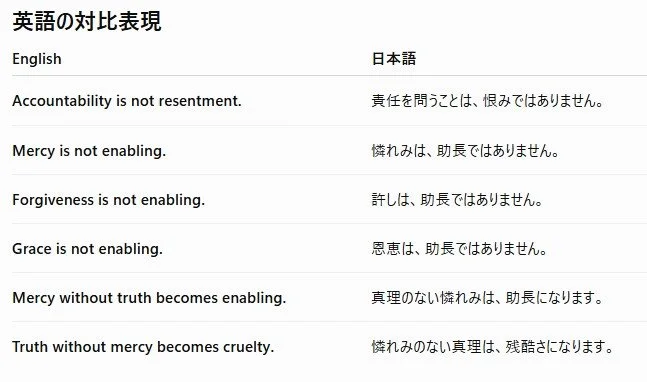
English日本語Accountability is not resentment.責任を問うことは、恨みではありません。Mercy is not enabling.憐れみは、助長ではありません。Forgiveness is not enabling.許しは、助長ではありません。Grace is not enabling.恩恵は、助長ではありません。Mercy without truth becomes enabling.真理のない憐れみは、助長になります。Truth without mercy becomes cruelty.憐れみのない真理は、残酷さになります。
意味の整理
Accountability
責任を問うこと。間違いを曖昧にせず、何が問題だったのかを明確にすること。
Resentment
恨み、怨恨。相手を責め続け、心が苦くなること。
Mercy
憐れみ。相手を完全に切り捨てず、回復の可能性を残す心。
Enabling
助長。間違いを止めずに、結果的にその人が同じ問題を続けることを許してしまうこと。
Grace
恩恵、恵み。相手が完全でなくても与えられる神様的な愛や赦し。
Cruelty
残酷さ。正しいことを言っていても、愛や憐れみがなく、人を傷つけるだけになること。
まとめると
Dunkley会長が言いたかったのは、
間違いは正さなければならない。
しかし、恨みで正してはいけない。
憐れみは必要だが、間違いを放置してはいけない。
真理は必要だが、憐れみがなければ残酷になる。
ということだと思います。
